
 English
 中文简体
中文简体The Importance and Challenges of Marine Anchors Marine anchors are essential components in the operation of vessels, playing a critical role in ensuring the stability and safety of ships while they ar...
READ MORE



Aug 12, 2026
Content
A deck crew connecting a mooring chain to a sinker and an engineer rigging a towing bridle face the same question: which shackle is the right one? The answer starts with the direction of the load, not with the pin diameter. A bow shackle carries loads from multiple angles without bending its pin; a Dee shackle is built for straight in-line tension. Choose the shape first, then match the pin, material and working load limit to the job.
In marine rigging, shackles do more than join components—they are the failure-critical links between anchors, chains, cables and deck fittings. Selecting the wrong type, or overlooking corrosion and side loading, can reduce a shackle's safe capacity far below its stamped rating. This guide explains the main types of marine rigging shackles, what separates one from another, and where each belongs in a real anchoring or mooring system.
A shackle is a U-shaped or D-shaped connector made of three functional parts: the body, the pin, and the retaining element that keeps the pin in place. The body carries the load through its curved section, while the pin closes the opening. The weak point is almost always the pin under bending or shear, which is why working load limits are published for straight-line pull on the bow center and on the pin.
In marine service, manufacturers mark the shackle body with size and grade information so the user can verify the component before each use. Marine rigging shackles from a reliable supplier carry clear marking, a test certificate and the applicable standard, whether the product follows an American G-series pattern or a European DIN/ISO configuration.
In practice, shackle types divide into two broad families: anchor shackles (bow) and chain shackles (dee). The difference is geometric and functional at the same time.
The anchor shackle has a large curved bow that rises above the level of the pin. This shape gives the shackle room to accept loads from different angles without the load path cutting across the pin. The bow also spreads the load across a wider arc, which is why anchor shackles are the default for mooring lines, towing bridles, anchor chain connections and any joint where the pull can shift direction. For such multi-directional work, a forged American bow shackle remains the standard choice.
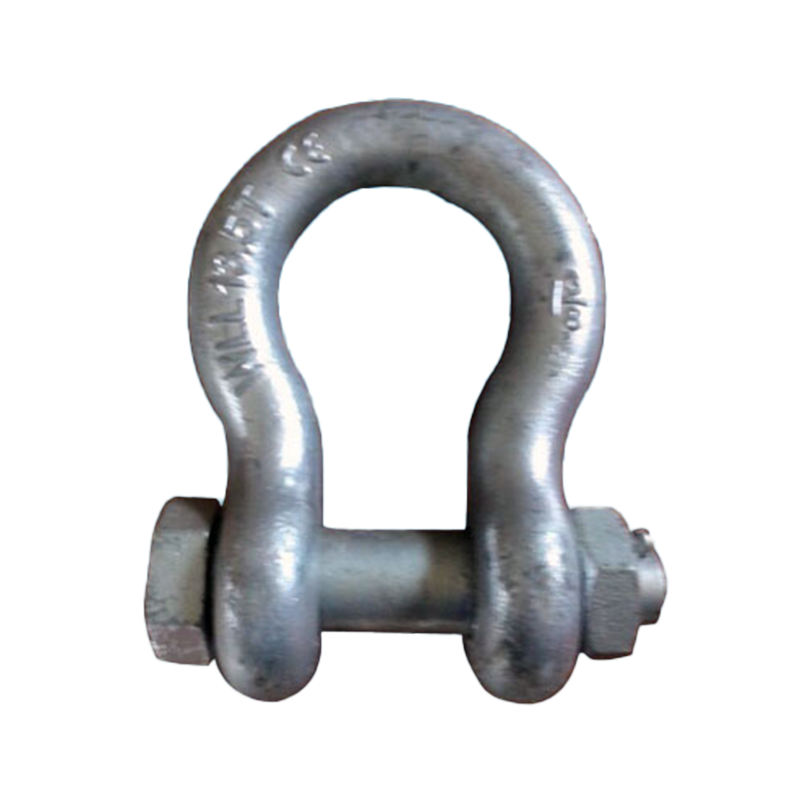 Wholesale G2130 American Bow Shackle Suppliers, Factory - Nantong Yangfan MarineNantong Yangfan Marine Equipment Co., Ltd. is China wholesale G2130 American Bow Shackle suppliers and factory,The size of the G2130 Amer...View Product →
The Dee shackle, named after its D-shaped body, has a narrower arc and sits closer to the pin. This shape limits the angle at which the load can act, but it creates a more compact connection and keeps the load path centered in straight tension. In lifting and deck rigging, the Dee shackle is preferred when two components are pulled in one line—wire rope to a padeye, cable to a bollard, or a shackle inside a chain sling. For exposed deck work that needs corrosion resistance, a stainless steel D-shackle provides the same straight-line capacity and much better seawater performance.
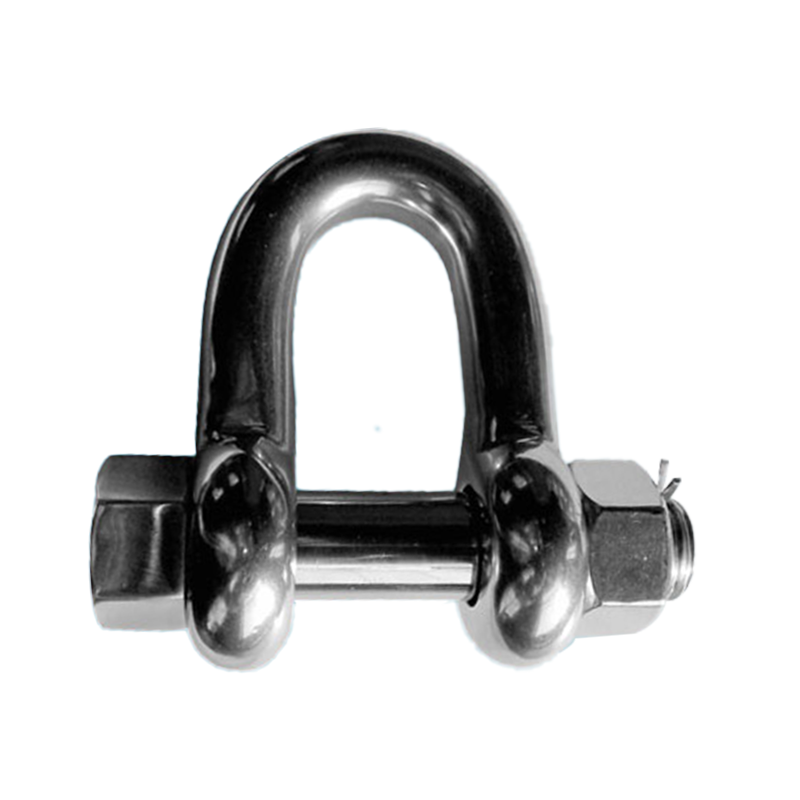 Wholesale G2150 American D-Shackle (Stainless Steel) Suppliers, Factory - NantonNantong Yangfan Marine Equipment Co., Ltd. is China wholesale G2150 American D-Shackle (Stainless Steel) suppliers and factory,G2150 Amer...View Product →
Beyond these two families, specialty shapes exist: wide body shackles for sling clearance, long reach shackles for connecting multiple components, and snap shackles for quick release. In marine rigging these are the exception rather than the rule, but they solve geometry problems that standard shapes cannot.
| Characteristic | Bow / Anchor Shackle | Dee / Chain Shackle |
|---|---|---|
| Body shape | Large arc rising above the pin | Narrow D-shaped body |
| Load direction | Multi-directional loads | Straight in-line tension |
| Typical uses | Mooring, towing, anchor chain | Cable termination, lifting, lashing |
| Compactness | Requires more clearance | Fits tight spaces |
| Side-load behavior | More tolerant of angle | WLL drops if side-loaded |
The pin is the part that fails first when a shackle is misapplied, so its design should match the permanence and vibration level of the connection.
The screw pin is threaded into the body and tightened by hand or with a small tool. It is fast to install and remove, which makes it convenient for temporary rigging, load testing, or connections that are frequently disconnected. In marine service, screw pins need periodic checks because vessel motion can work them loose.
A bolt-type shackle uses a nut on the end of the pin, secured with a cotter pin or split pin. It cannot be removed accidentally, so it is the right choice for permanent installations, anchor chain terminations, and any spot where vibration or shock loads are present. The extra parts add assembly time, but the connection is far more reliable over a long service life.
Round pin shackles have a plain cylindrical pin that rotates inside the body. They are used where a fixed pin would create bending fatigue or where the connected component, such as a swivel, needs to rotate freely. They appear less often in general deck rigging but show up in anchor chain accessories and rotating connections.
Material selection determines how long a shackle survives in salt water and what working load it can carry. Four common options cover almost every marine rigging need.
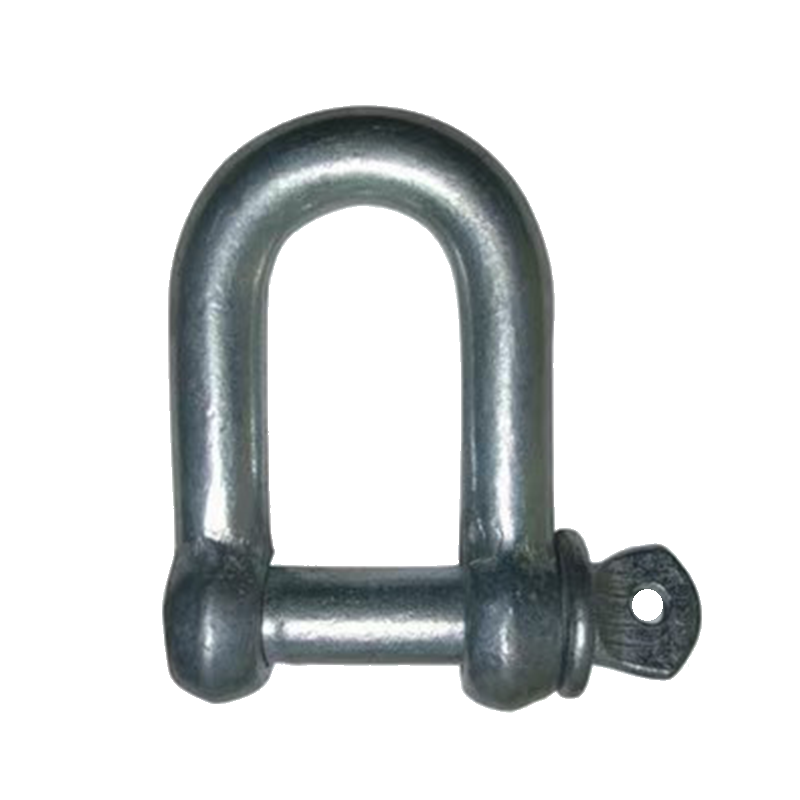 Wholesale G210 American Type D-Shaped Die Forged Shackle (316) Suppliers, FactorNantong Yangfan Marine Equipment Co., Ltd. is China wholesale G210 American Type D-Shaped Die Forged Shackle (316) suppliers and factory,...View Product → offers the corrosion margin that carbon steel cannot match.
| Material | Typical Finish | Marine Suitability | Typical Use |
|---|---|---|---|
| Carbon steel | Hot-dip galvanized | Good while coating is intact | Anchor chain, mooring |
| Alloy steel | Painted or bare | Requires frequent maintenance | Heavy lifting |
| Type 304 stainless | Passivated | Coastal and fresh water | Yacht fittings, deck hardware |
| Type 316 stainless | Passivated | Continuous seawater exposure | Mooring, exposed rigging |
Once the shape, pin and material are clear, a few practical points separate a good choice from a risky one.
A shackle's published working load limit is based on straight-line loading between the bow and the pin. When a load is applied across the jaws of the shackle, the pin bends and the capacity drops. Dee shackles are most sensitive; bow shackles are more tolerant but still not designed for regular side loading. In mooring layouts, avoid angles that put the load across the pin.
A shackle is one link in a system that includes the anchor, chain, swivels, end fittings and deck hardware. If the chain follows one standard and the shackle follows another, the pin diameter may not fit the link. Check the inside width of the shackle against the link diameter before placing an order.
Marine shackles fail gradually: wear on the pin, stretching of the bow, pitting in stainless steel, and cracks near the forging or weld lines. A visual check before each lift or mooring operation catches most problems. The basic practices are similar to those covered in discussions of anchor reliability and maintenance management, where regular inspection is treated as the lowest-cost form of insurance.
Marine shackles are manufactured to recognizable patterns: the American G-series (G209 bow, G210 dee, G2130 bow, G2150 dee), European DIN/ISO shapes, and JIS configurations. For vessels classed by classification societies, the shackle should come with the corresponding material certificate and proof load test. Manufacturers that offer CCS, ABS, LR, DNV, NK, BV, KR, RS or RINA certification usually publish their documentation requirements in the technical FAQ.
Mooring systems involve anchors, chains, shackles, swivels, buoys and deck fittings. When these items come from one manufacturer that matches them to the same design standard, the fit is more predictable and documentation is easier to consolidate. Browsing the manufacturer's product overview is a practical starting point when planning a newbuild or a major refit.
The type of shackle that belongs in a marine rigging system is decided by the load path. Multi-directional loads such as mooring and towing point toward a bow shackle. Straight-line connections between cable, chain and deck fittings point toward a Dee shackle. From there, select the pin style by whether the connection is temporary or permanent, the material by whether the shackle will live in salt water, and the working load limit by the heaviest load in the system.
Because the shackle is the smallest component in many anchoring and mooring assemblies, it is also the most easily overlooked. Treat it as a precision component: verify the marking, confirm the certificate, inspect the bearing surfaces, and make sure the pin diameter fits the mating component. That level of attention is what keeps a mooring system reliable over years of service.
The Importance and Challenges of Marine Anchors Marine anchors are essential components in the operation of vessels, playing a critical role in ensuring the stability and safety of ships while they ar...
READ MOREStability Challenges of Aquaculture Equipment: Why Are Aquaculture Mooring Anchors So Important? In modern aquaculture, especially offshore or offshore aquaculture, equipment stability is the cornerst...
READ MOREThe Role of a PE Yacht Anchor in Enhancing Mooring Stability The stability of a yacht in rough waters is influenced by various factors such as wind, waves, and currents. One of the most critical eleme...
READ MOREWhat materials are used for steel spherical buoys, and what are their structural advantages? As a key component of marine and inland navigation systems, the structural design and material selection of...
READ MORE
Copyright © Nantong Yangfan Marine Equipment Co., Ltd. All Rights Reserved.
