
 English
 中文简体
中文简体The Importance and Challenges of Marine Anchors Marine anchors are essential components in the operation of vessels, playing a critical role in ensuring the stability and safety of ships while they ar...
READ MORE



Aug 19, 2026
Picture a 20-meter workboat holding steady in an exposed anchorage while a 25-knot wind pushes against its hull and the tide runs in the opposite direction. The engine is off, yet the vessel barely moves. That stability comes from a relatively small piece of steel on the seabed. An anchor is not just a heavy mass that glues the boat to the ocean floor. It is a mechanical device that turns the vessel's pull into a digging force inside the seabed. Because the flukes penetrate and the surrounding ground must shear before the anchor can move, it can hold a boat far heavier than the anchor itself.
Content
An anchor holds when its flukes or blades penetrate the bottom and the surrounding soil resists the pull. The chain or rope approaches the anchor almost parallel to the seabed, so the anchor is loaded in a direction that drives it deeper instead of lifting it out. This is why a correctly set anchor behaves like a buried wedge.
Most modern anchors are designed to trip. A stockless anchor lands on one side; the horizontal pull on its tripping palms rotates it, forcing the flukes into sand or clay. A fluke-style anchor uses a broad, sharp blade and a crown that digs quickly. A high-holding-power anchor uses a more efficient planform to develop the same resistance with less weight. The anchor's weight still matters because it helps the flukes penetrate the first time, but once the anchor is buried, the strength of the bottom, not the mass of the anchor, provides most of the holding force.
Sand compacts under load and generally gives excellent holding. Mud also holds well once the flukes fully penetrate, although very soft mud may let the anchor drag before it digs deep. Hard clay resists penetration and may need a sharp, heavier anchor. Weed, shell, and rock bottoms change the picture again and can make a design that works well in one place fail in another. The same anchor that sets instantly in firm sand may skip over a weeded ledge, so bottom condition is part of the equation before you select a type.
The anchor itself is only half the system. The rode, consisting of chain, rope, or a combination of both, connects the boat to the anchor and absorbs a large share of the load. Chain lies along the bottom and forms a curve called a catenary. When the boat surges, the chain must be lifted from the seabed before the anchor feels the full shock. That delay reduces the peak load on the anchor and helps prevent the flukes from pulling out. Nylon rope stretches and adds resilience, but it has no weight on the bottom, so a length of chain is usually joined to the anchor to keep the pull low and protect the rope from chafe.
Scope is the ratio of rode length to water depth. A scope of 5:1 is a reasonable starting point for most overnight stops; in stronger wind or current, 7:1 or more gives the anchor a lower pull angle and lets the chain absorb more movement. Short scope pulls the anchor upward and raises the chance of dragging. The chain also adds friction along the seabed, and the chain's weight helps the anchor shank stay low when the boat swings on a tide change.
For vessels that rely on chain, the chain diameter, grade, and length must be matched to the anchor and the vessel's displacement. A properly specified anchor chain is a safety component, not a commodity, because a failed link in a holding situation can leave the vessel uncontrolled.
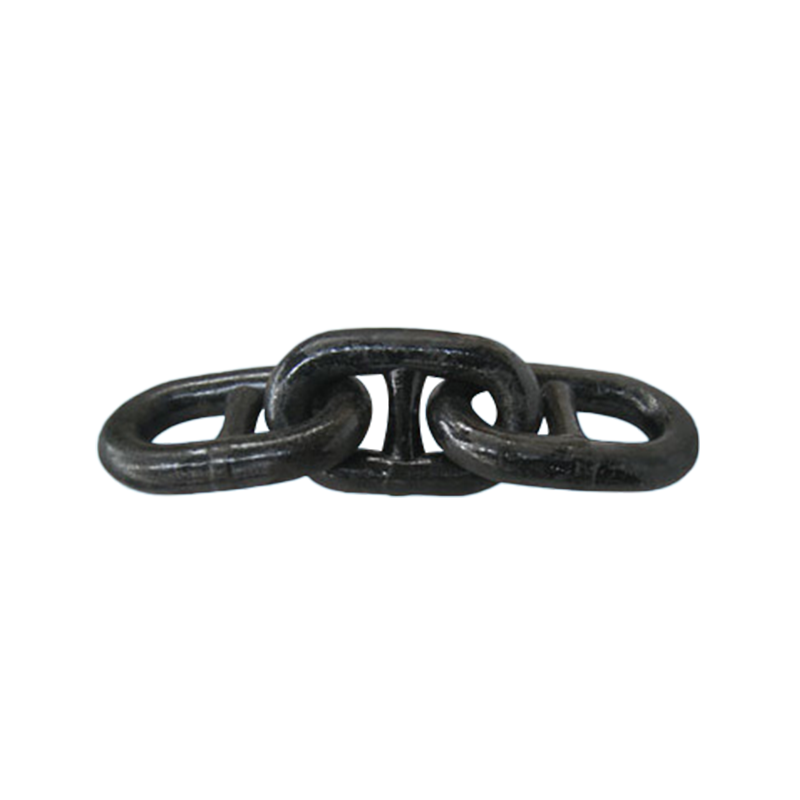 Wholesale Anchor Chain Suppliers, Factory - Nantong Yangfan Marine Equipment Co.Nantong Yangfan Marine Equipment Co., Ltd. is China wholesale Anchor Chain suppliers and factory,The studded anchor chain is a high-stren...View Product →
No single anchor design is ideal for every bottom and every vessel. Designs differ because holding power, resetting behavior, and stowage requirements differ. The table below shows common temporary anchor types and the conditions where they generally perform best.
| Anchor type | Typical bottoms | Holding characteristic |
|---|---|---|
| Fluke | Sand, mud | High holding-to-weight ratio; resets well |
| Plow | Sand, weed, gravel | Good penetration; moderate resetting |
| Claw | Rock, weed, mixed | Multi-directional hold; quick setting |
| Stockless | Mud, clay, sand | Compact stowage; lower holding-to-weight ratio |
| Mushroom | Soft mud | Permanent mooring; relies on suction and weight |
Fluke anchors use wide, flat blades that dig into sand and mud quickly. They are a practical choice for small and mid-size boats because they combine a high holding-to-weight ratio with straightforward handling. If a fluke-style anchor fits your vessel, look for a model with a correctly sized shank and secure welds. Fluke-style anchors are produced in sizes to match common boat lengths.
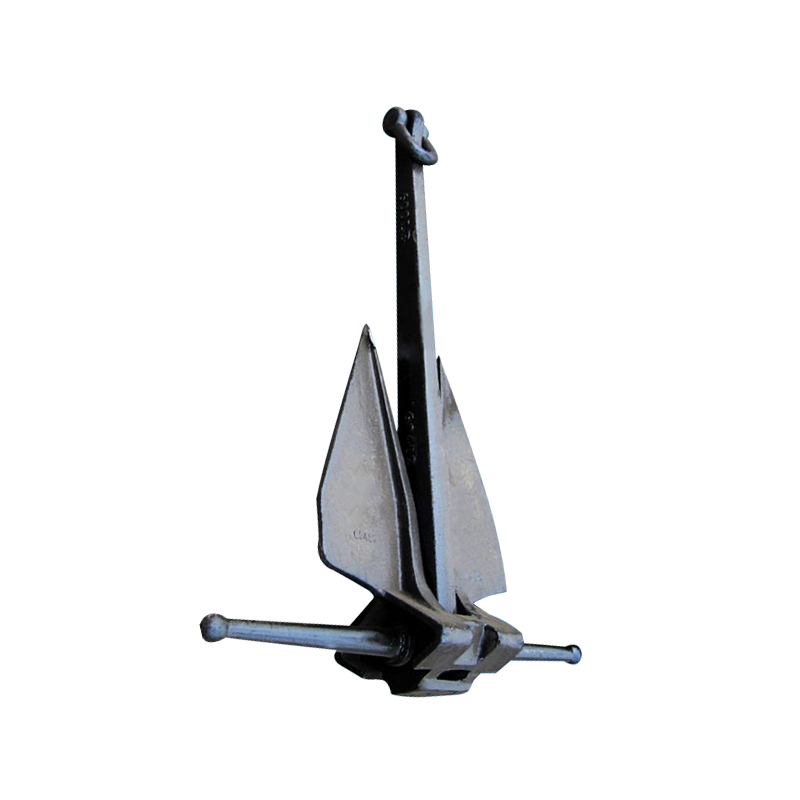 Wholesale YF-Danforth Anchor Suppliers, Factory - Nantong Yangfan Marine EquipmeNantong Yangfan Marine Equipment Co., Ltd. is China wholesale YF-Danforth Anchor suppliers and factory,This anchor is a high-holding anch...View Product →
Plow anchors penetrate sand and weed and tolerate wind shifts reasonably well. Claw anchors are versatile on rocky or mixed bottoms because they reset when the boat swings. Stockless anchors are common on larger ships because they stow neatly in a hawsepipe, while mushroom anchors suit permanent moorings, where weight and suction in soft mud provide the holding force.
Sizing is not a simple hull-length calculation; displacement, windage, and typical anchorage conditions matter. Our marine anchor guide covers sizing, scope, and holding ground in more detail.
Most dragging incidents are not caused by an undersized anchor; they are caused by an anchor that was never set. The goal is to make the flukes bury themselves while the boat moves backward under controlled tension. Use this process to set the anchor properly:
On a mixed bottom, a dragging anchor sometimes digs in again. If it fails more than once, raise it and choose another spot instead of leaving it under continuous strain. For larger vessels working on all chain, a chain stopper gives a mechanical grip on the chain and takes the snubbing load away from the windlass.
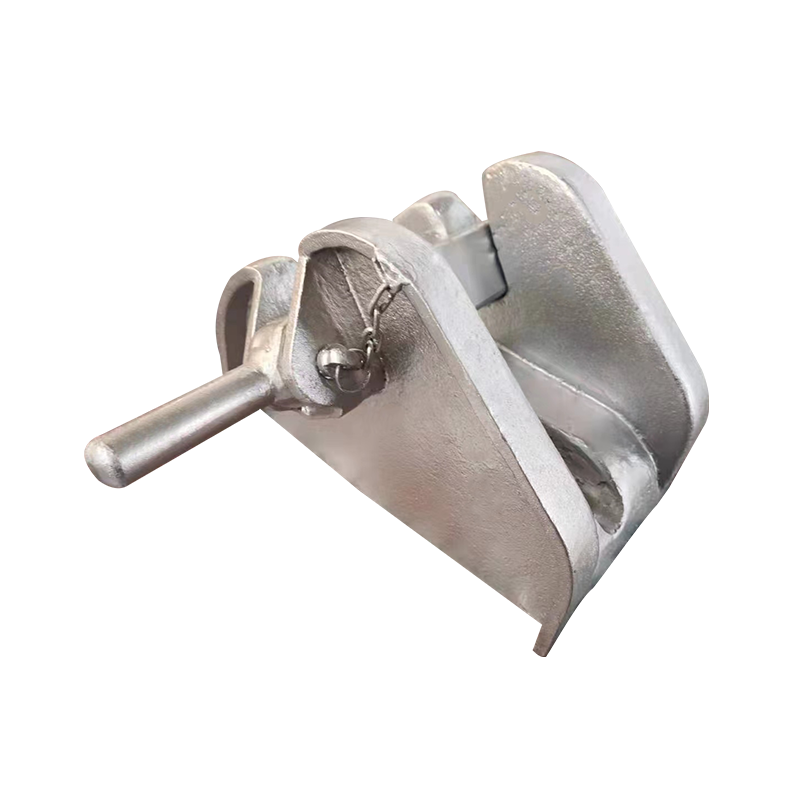 Wholesale Guillotine Chain Cable Stopper Suppliers, Factory - Nantong Yangfan MaNantong Yangfan Marine Equipment Co., Ltd. is China wholesale Guillotine Chain Cable Stopper suppliers and factory,The innovative guillot...View Product →
To retrieve the anchor, motor slowly toward it while the windlass takes in slack. When the chain becomes nearly vertical, the pull angle changes and usually breaks the flukes free of the seabed. Lift the anchor to the waterline and inspect it for mud, weed, or damage before securing it.
Routine inspection matters more than most owners expect. Check the chain for stretched links, cracked welds, and corrosion. Inspect shackles and swivels for seized pins and damaged threads. Look at the anchor for bent or cracked flukes and a worn shank. Galvanized surfaces should remain intact; stainless steel welds need attention because crevice corrosion can develop in salt water. In commercial and certificated operations, use components with recognized classification society certification and replace any part that shows distortion or cracking. An anchor with a bent shank should not be straightened and returned to service.
An anchor works because the anchor body, the chain, the scope, and the seabed work together. It is not simply dropped over the side; it must be set, and the chain and rope must hold the anchor shank at the correct angle. When those elements are aligned, a modest anchor can hold a vessel safely through wind, current, and wave action. When one of them is wrong, the whole system can fail.
For more specialized requirements, you can browse the full range of marine anchors and mooring equipment to compare designs, materials, and sizes before you specify an anchoring system.
The Importance and Challenges of Marine Anchors Marine anchors are essential components in the operation of vessels, playing a critical role in ensuring the stability and safety of ships while they ar...
READ MOREStability Challenges of Aquaculture Equipment: Why Are Aquaculture Mooring Anchors So Important? In modern aquaculture, especially offshore or offshore aquaculture, equipment stability is the cornerst...
READ MOREThe Role of a PE Yacht Anchor in Enhancing Mooring Stability The stability of a yacht in rough waters is influenced by various factors such as wind, waves, and currents. One of the most critical eleme...
READ MOREWhat materials are used for steel spherical buoys, and what are their structural advantages? As a key component of marine and inland navigation systems, the structural design and material selection of...
READ MORE
Copyright © Nantong Yangfan Marine Equipment Co., Ltd. All Rights Reserved.
