
 English
 中文简体
中文简体The Importance and Challenges of Marine Anchors Marine anchors are essential components in the operation of vessels, playing a critical role in ensuring the stability and safety of ships while they ar...
READ MORE



Sep 17, 2026
Choosing an anchor that is too light is one of the most common mistakes boat owners make. A lightweight anchor may hold in calm conditions but will drag the moment wind or current picks up. The real question is not just "how heavy an anchor do I need," but "how much holding power does my boat require under the worst conditions you expect to encounter." The answer begins with a proven rule of thumb: for moderate conditions, select an anchor weight equal to roughly 1 lb per foot of boat length for vessels under 30 ft, and gradually increase that ratio for larger boats. The table below provides a practical starting point based on boat length and typical displacement.
| Boat Length (ft) | Light Displacement (lb) | Recommended Anchor Weight (lb) | Chain Length (ft) |
|---|---|---|---|
| 16–20 | 1,500–2,500 | 4–8 | 6–10 |
| 21–25 | 2,500–4,000 | 8–10 | 10–15 |
| 26–30 | 4,000–6,500 | 10–14 | 15–20 |
| 31–35 | 6,500–10,000 | 14–20 | 20–30 |
| 36–40 | 10,000–15,000 | 20–30 | 30–40 |
These figures assume a well‑set anchor on a sand or mud bottom with a scope of 7:1. For heavy weather, add 30–50 % to the anchor weight.
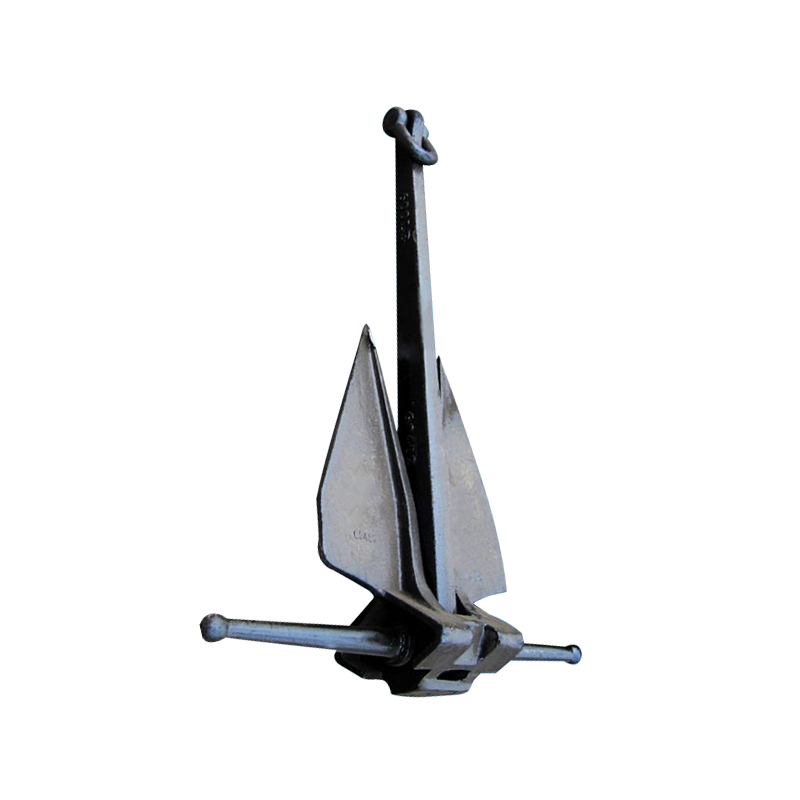 YF-Danforth High-Holding Anchor for Efficient Bow WeightThis Danforth-style anchor offers a high holding coefficient of 1:10–12, making it a lightweight yet powerful choice. It helps reduce bow weight while improving windlass performance.View Product →
Content
Length is a convenient reference, but displacement is the real driver. A 30‑ft sailboat with a full keel and heavy rigging may displace 8,000 lb, whereas a 30‑ft express cruiser might weigh only 5,000 lb. The sailboat needs an anchor with at least 18 lb of weight, while the cruiser can get away with 14 lb. Holding power does not scale linearly with weight—it depends on the anchor’s design, fluke area, and ability to dig into the bottom. A modern high‑holding‑power anchor often provides twice the holding force of a traditional anchor of the same mass. That is why many skippers select a lighter but more efficient design to save bow weight and improve windlass performance.
Anchor manufacturers rate holding power in pounds or kilograms of resistance before the anchor drags. A 10‑lb Danforth‑style anchor can generate 500 lb of holding power in soft mud, but only 250 lb in hard sand. Meanwhile, a 14‑lb fluke anchor may produce 700 lb in the same mud. The rule “an anchor should hold eight to ten times its own weight” is only a rough benchmark. For a 10,000‑lb boat, you need at least 1,000 lb of holding power in calm conditions, and up to 2,500 lb in a storm. Using the table above, a 30‑lb anchor is a reasonable minimum for that vessel, provided it is a proven high‑holding design.
Every 10 kn of wind adds roughly 100 lb of force on a 30‑ft boat. Current adds even more: 2 kn of current exerts about 300 lb on the same hull. When you plan to anchor overnight or in exposed waters, increase anchor weight by one size (typically +4 lb to +8 lb). Do not rely on weight alone—use enough chain and a kellet if needed. A full guide on anchor selection includes recommendations for chain diameter and scope ratios.
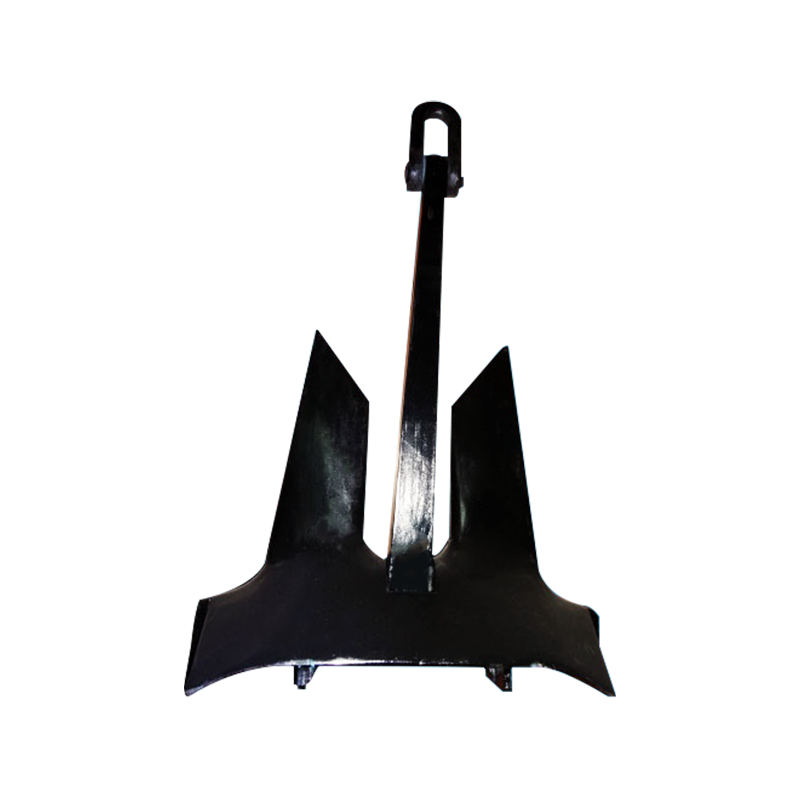 YF-09 AC-14 Balanced High Holding Power AnchorThe AC-14 anchor provides a strong grip coefficient of 1:8–12 and adapts well to various bottom types. It is ideal for skippers who anchor in mixed substrates and need reliable performance.View Product →
The same anchor weight behaves differently on sand, mud, grass, or rock. Lightweight anchors (8–12 lb) work well on soft mud because they bury completely. On hard sand, a heavier anchor (14–20 lb) is needed to penetrate. For kelp or grass, a plow‑style or scoop‑style anchor with a sharp fluke tip is effective even at moderate weight. If you regularly anchor in varied bottoms, consider a high‑holding‑power model that performs across substrates. The weight you choose should be the minimum that still sets reliably in the hardest bottom you anticipate.
Many skippers underestimate the role of chain. Adding 20 ft of 5/16‑inch chain adds about 25 lb of weight at the bow, but that chain also keeps the shank low and helps the anchor dig in. In heavy weather, a 30‑ft chain plus a lightweight anchor often holds better than a heavier anchor with only rope. Always factor chain weight into your total anchor system mass when deciding “how heavy an anchor do I need.”
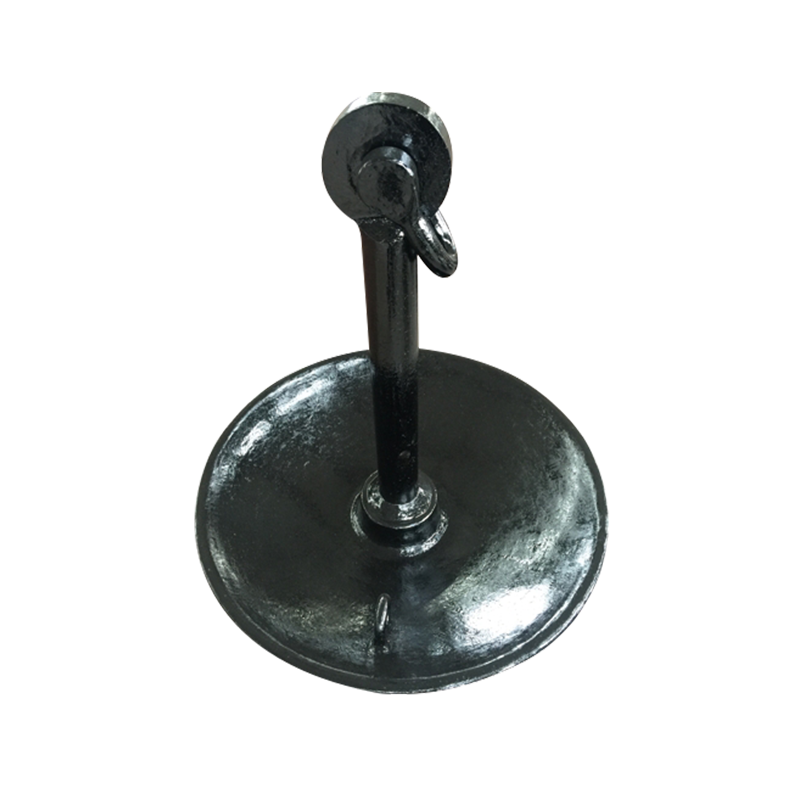 YF-Mushroom Anchor for Soft Bottom and Cable SecuringThis mushroom anchor features smooth or toothed edges for soft soils and cable protection. It complements your anchor system when chain weight and holding power in softer substrates are priorities.View Product →
Following these steps will give you an anchor that inspires confidence without unnecessary bow weight. Remember, a well‑set, properly sized anchor is far safer than a heavy anchor that cannot set correctly due to poor design or insufficient scope.
| Condition | Multiplier | Example (30‑ft boat, base 14 lb) |
|---|---|---|
| Calm, protected harbor | 0.8 | 11 lb |
| Typical coastal (20 kn wind) | 1.0 | 14 lb |
| Exposed ocean (30 kn wind) | 1.5 | 21 lb |
| Heavy storm (50 kn+) | 2.0 | 28 lb |
Use these multipliers as a sanity check. A 21‑lb high‑holding anchor is often adequate for a 30‑ft boat in moderate offshore conditions, while a 14‑lb lightweight anchor is fine for day anchoring in calm bays.
For most recreational boats under 40 ft, start with the weight from the length table, then adjust upward for wind, displacement, and bottom hardness. If you are replacing an existing anchor that dragged, go one size heavier. The best approach is to consult the manufacturer’s weight guidelines for your specific model, but the information above provides a reliable starting point. A slightly heavier anchor is always better than one that is too light, especially when conditions deteriorate.
The Importance and Challenges of Marine Anchors Marine anchors are essential components in the operation of vessels, playing a critical role in ensuring the stability and safety of ships while they ar...
READ MOREStability Challenges of Aquaculture Equipment: Why Are Aquaculture Mooring Anchors So Important? In modern aquaculture, especially offshore or offshore aquaculture, equipment stability is the cornerst...
READ MOREThe Role of a PE Yacht Anchor in Enhancing Mooring Stability The stability of a yacht in rough waters is influenced by various factors such as wind, waves, and currents. One of the most critical eleme...
READ MOREWhat materials are used for steel spherical buoys, and what are their structural advantages? As a key component of marine and inland navigation systems, the structural design and material selection of...
READ MORE
Copyright © Nantong Yangfan Marine Equipment Co., Ltd. All Rights Reserved.
