
 English
 中文简体
中文简体The Importance and Challenges of Marine Anchors Marine anchors are essential components in the operation of vessels, playing a critical role in ensuring the stability and safety of ships while they ar...
READ MORE



Sep 16, 2026
When a buoy rests in a harbor entrance, it seems to move with the waves but never actually drifts away. That is not luck. A buoy is held in place by a mooring system designed around one simple principle: the floating part must be connected to the seabed through a component that can absorb the energy of wind, waves, and current without transmitting a violent jerk to the anchor.
In practice, a buoy is anchored with an anchor or sinker on the bottom, a chain running upward to the buoy, and shackles or swivels between each section. The chain hangs in a curve called a catenary, which acts like a spring. When the buoy is pushed sideways, part of the chain lifts from the seabed, gradually increasing the pull on the anchor. This is why buoys can survive storms that would snap a taut line.
Content
Every buoy mooring, from a small river marker to a large offshore data buoy, shares the same basic structure. You can usually separate the system into four parts.
| Component | Primary job |
|---|---|
| Buoy hull | Floats, carries the light, radar reflector, or sensor |
| Mooring chain | Connects the buoy to the ground tackle, absorbs wave energy |
| Shackles and swivels | Connect chain sections and prevent twisting from wind or current |
| Anchor or sinker | Provides holding force on the seabed |
The buoy hull is the only visible part. Steel hulls are preferred for permanent installations because they resist impact, UV damage, and abrasion better than plastic. A steel spherical buoy, for example, can serve as a mooring point for pleasure boats or a navigational mark in coastal water for decades.
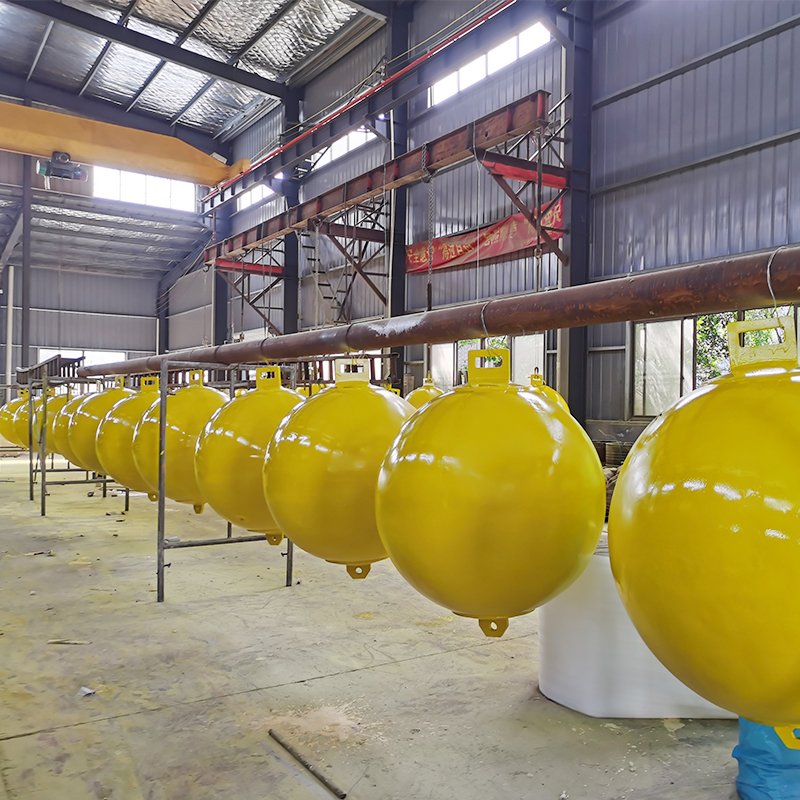 Marine Steel Spherical Buoy for Permanent Mooring and NavigationThis steel spherical buoy offers stable floating performance through evenly distributed force and high resistance to overturning. It can support navigation or meteorological sensors, making it ideal for long-term coastal and marine applications.View Product →
Chain is the most common connector because its weight creates the catenary effect. Rope is sometimes used in temporary systems, but all-chain moorings are considered more reliable for long-term installations.
An anchor or sinker resists two kinds of loads: horizontal pull from currents and wind, and vertical lift from waves acting on the buoy. For most buoy moorings, horizontal load is much larger than vertical lift. The ground tackle therefore needs a high surface area against the soil or a high mass to resist sliding.
There are three practical approaches:
Seabed conditions determine which approach to use. A muddy bottom can hold a fluked anchor very well, but the same anchor may fail on smooth rock. A sinker may slide on soft mud because it has no buried surface to grip. You should always perform a seabed survey or use a local chart before choosing the ground tackle.
For an overview of the most common anchor styles and where each performs best, see our complete guide to anchor types.
The chain between the buoy and the anchor does more than connect the two points. Its weight gives the mooring its unique ability to release energy slowly. As the buoy moves sideways, the chain lifts from the seabed, and the lifted length increases the pull on the anchor gradually. If the same connection were made with a light rope, the load would spike instantly and could pull the anchor out or snap the connection.
Two chain characteristics matter: diameter and length.
Steel chain used in buoy moorings is usually hot-dip galvanized to resist corrosion. Stainless steel is used in special situations like scientific buoys where corrosion resistance is more important than cost. A standard stud-link anchor chain is a proven choice for permanent buoy systems because it resists kinking and provides a smooth surface for the catenary curve.
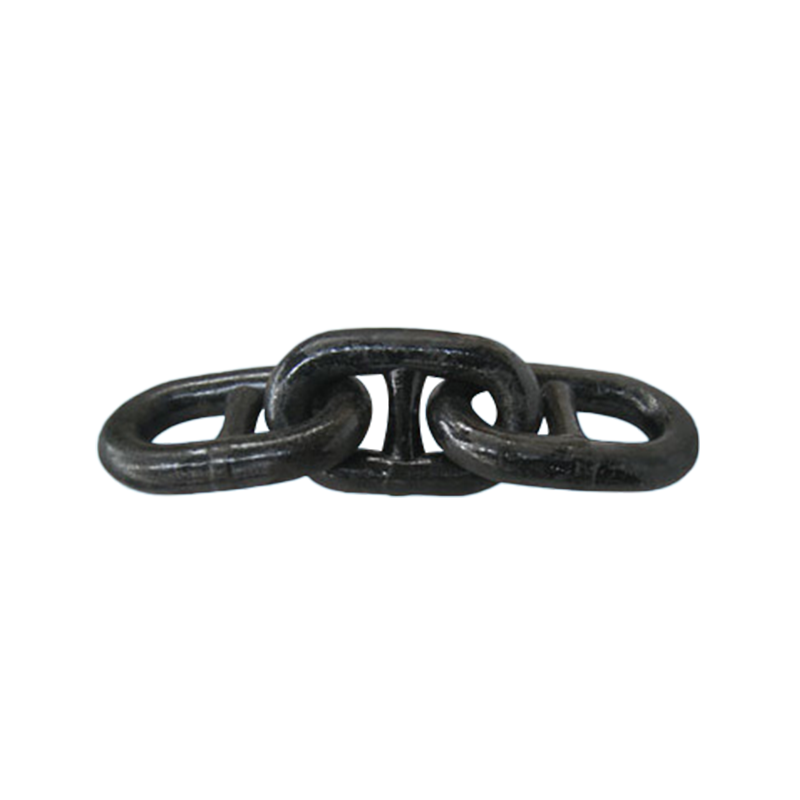 Hot-Dip Galvanized Stud-Link Anchor Chain for Buoy SystemsFeaturing a wide diameter range from 12.5 mm to 162 mm, this studded anchor chain provides tensile strength and corrosion resistance suitable for permanent moorings. Its design minimizes kinking and supports reliable catenary performance.View Product →
When chain sections are joined, a swivel is often installed between the buoy and the chain or between the chain and the anchor to prevent twisting.
While fluked anchors are effective in soft bottoms, many permanent buoy installations use sinkers. A sinker is a heavy mass placed on the seabed, and its holding force comes from weight and friction rather than from penetrating the soil.
Concrete sinkers are cheap and can be cast into a wide range of shapes, which makes them the default choice for many mooring contractors. Cast-iron and steel sinkers offer a higher density, so they occupy less space and can be used in areas with strong current where a larger concrete block would be unwieldy. The table below summarizes the trade-offs.
| Material | Best seabed | Main advantage |
|---|---|---|
| Concrete | Mud, sand, clay | Low cost, mouldable |
| Cast iron | Hard sand, rock | High density, compact |
| Steel | Rock, gravel | Strong and durable |
When a sinker is specified, a lifting eye or an embedded chain loop is usually cast or welded into the mass. That attachment point must be strong enough to handle the full breaking load of the mooring chain, because all the force from the buoy passes through it.
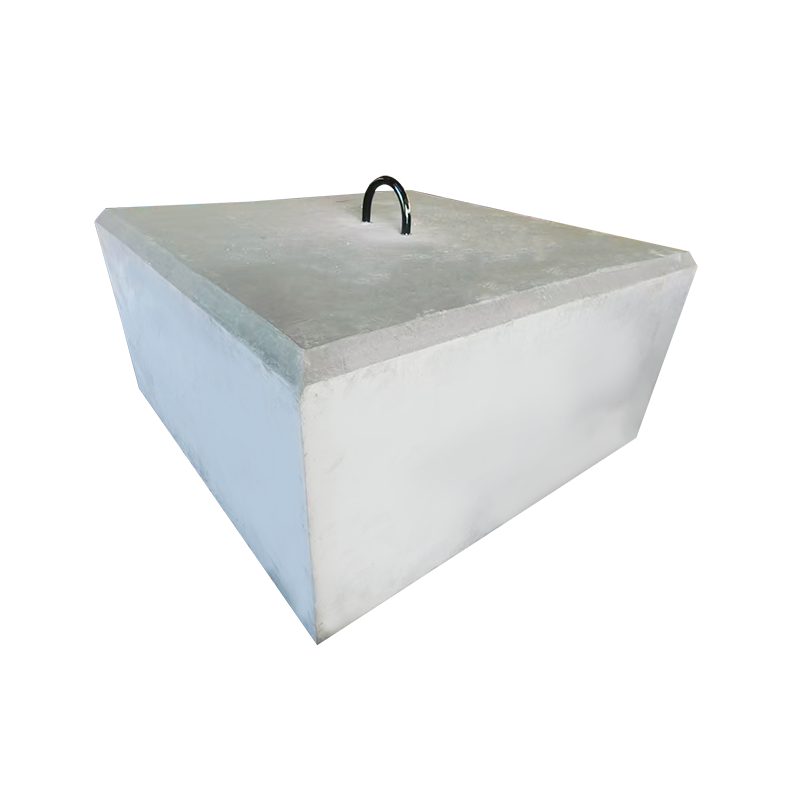 High-Strength Concrete Mooring Sinker for Stable Seabed FixingEngineered from durable concrete, this sinker delivers reliable weight and stability across varying depths and seabed conditions. Its corrosion-resistant construction ensures long-term performance while maintaining a secure attachment point for mooring forces.View Product →
The correct weight of a sinker depends on the buoy displacement, the water current, and the depth. A common starting point for a medium navigational buoy is a sinker weighing approximately three to five times the weight of the chain lying on the seabed. A dedicated engineering calculation is always better than a rule of thumb.
Different buoys face very different load regimes. A navigational buoy marking a channel is exposed to constant wind and tidal current; it must hold position with little tolerance. A small yacht mooring buoy is subject to repeated shock loads when boats approach and leave, which can work an anchor out of soft soil. A buoy anchored beside an aquaculture pen experiences both steady current and high-frequency wave forces, so its holding system needs a stronger anchor and a longer chain.
| Buoy type | Main load | Preferred ground tackle |
|---|---|---|
| Navigation marker | Constant current | Fluke anchor or concrete sinker |
| Mooring buoy for boats | Repeated shock loads | Heavy chain + fluke anchor |
| Aquaculture buoy | Current + vertical load | High holding power anchor or large sinker |
| Scientific/weather buoy | Wave lift | Large fluke anchor + long chain |
Water depth is one of the most important variables. In shallow water, the chain may rest on the seabed for a large share of its length, which adds friction and reduces anchor loading. In deep water, most of the chain hangs in the water column, so the anchor must carry more of the load. This is why a buoy moored in 20 meters of water needs a different ground tackle than one in 5 meters, even if the buoy and climate are identical. Unlike the temporary anchor of a boat, a buoy mooring is a permanent installation, so the design margin must be more conservative.
Installing a buoy mooring starts with a seabed survey to confirm the bottom type. The ground tackle is lowered first, then the chain is paid out and attached to the buoy. After the buoy is in position, the mooring is tensioned by towing the buoy backward or by pulling the chain with a workboat winch. This removes slack and sets the anchor or sinker into the seabed.
Once in service, a buoy mooring is exposed to constant motion, which can cause wear in specific places: the first chain link at the buoy, the shackle pin, and the point where the chain touches the seabed. An annual inspection should cover the following:
If you are planning a new mooring or have doubts about an old one, the mooring and anchoring common questions contains practical answers about setup and component selection.
Anchoring a buoy correctly is not a matter of dropping a weight overboard and hoping for the best. It is a system of carefully matched components: a buoy, a chain, connectors, and an anchor or sinker. The chain’s catenary absorbs wave energy, the ground tackle resists the load, and regular inspection keeps the whole loop reliable. When these parts are chosen for the specific water depth, seabed, and application, a buoy can stay in place for many years with only basic maintenance.
The Importance and Challenges of Marine Anchors Marine anchors are essential components in the operation of vessels, playing a critical role in ensuring the stability and safety of ships while they ar...
READ MOREStability Challenges of Aquaculture Equipment: Why Are Aquaculture Mooring Anchors So Important? In modern aquaculture, especially offshore or offshore aquaculture, equipment stability is the cornerst...
READ MOREThe Role of a PE Yacht Anchor in Enhancing Mooring Stability The stability of a yacht in rough waters is influenced by various factors such as wind, waves, and currents. One of the most critical eleme...
READ MOREWhat materials are used for steel spherical buoys, and what are their structural advantages? As a key component of marine and inland navigation systems, the structural design and material selection of...
READ MORE
Copyright © Nantong Yangfan Marine Equipment Co., Ltd. All Rights Reserved.
