
 English
 中文简体
The Importance and Challenges of Marine Anchors Marine anchors are essential components in the operation of vessels, playing a critical role in ensuring the stability and safety of ships while they ar...
READ MORE



Nov 09, 2026
An anchor chain is heavy, and once it is fully deployed it is doing two jobs at the same time: holding the boat and passing every surge, swell, and gust back to the bow. The windlass is built to move that chain, not to sit against a loaded one for hours. That is the gap a chain stopper fills. In simple terms, a chain stopper is a deck fitting that grabs the chain, locks it, and passes the pull into the hull so the windlass and its brake are left out of the load path. The details differ from one design to the next, but the working principle stays the same.
Content
A chain stopper has three jobs, and it helps to keep them separate in your mind. First, it blocks the chain so it cannot run out. Second, it takes the steady anchor load off the windlass, its brake, and the deck hardware around it. Third, it controls the lead of the chain between the bow roller and the windlass, so the chain runs in a predictable line instead of jumping or side-loading the gypsy.
It is not a brake and it is not a substitute for one. A brake holds by friction on the drum or gypsy. A stopper holds by putting a solid piece of metal in the path of a chain link. That difference matters when the load is dynamic. A pawl that has dropped between two links gives a positive stop, and the shock goes into the stopper body and its foundation rather than into the windlass bearings.
On many boats the stopper also earns its keep at night. Once the anchor is set and the chain is snubbed, the stopper keeps the chain from creeping out link by link while everyone sleeps. On working boats the same function protects the windlass when the vessel is left anchored for long periods.
Most stoppers share a simple anatomy: two parallel vertical plates on a base, a hinge pin, and a pivoting pawl or bar that drops down onto the chain. The plates guide the chain and take the side loads. The pawl blocks a link. A securing pin, latch, or lanyard keeps the pawl from flipping open by accident. On larger deck fittings the base is welded or bolted to a reinforced foundation, and that foundation is part of the load path just as much as the stopper itself.
Follow the pull and the path is easy to see. The anchor holds the seabed, the chain runs up to the bow roller, the stopper traps a link, and the tension goes from the stopper into the deck and then into the hull structure. Every connection in that line deserves the same attention. The anchor-to-chain joint is often the least inspected part, and a worn or mismatched end shackle can undo the benefit of a good stopper.
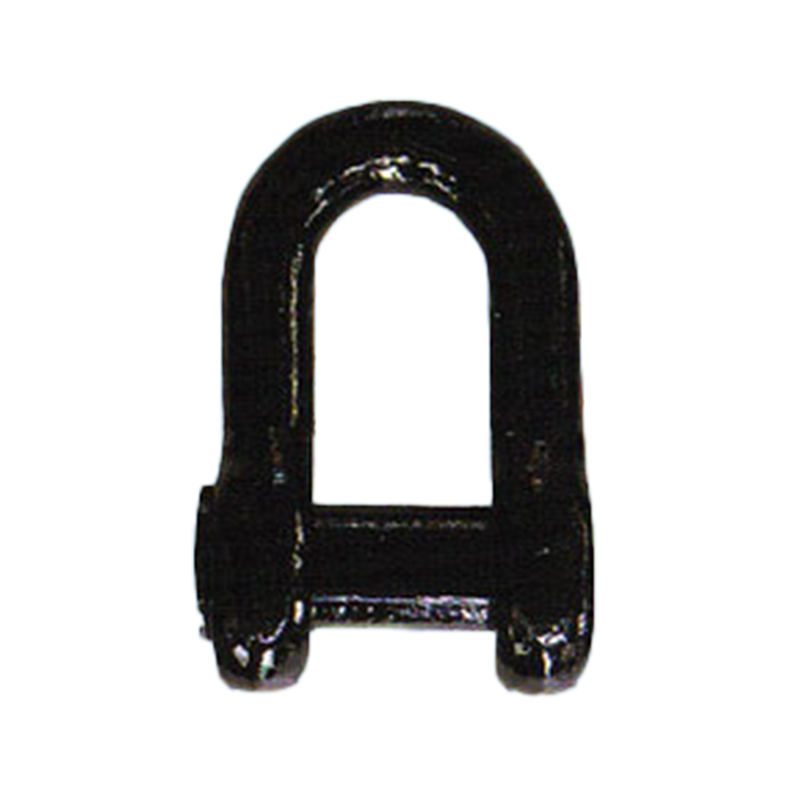 End Shackle for Anchor Chain ConnectionsA quick-connect end shackle for the anchor-to-chain joint, useful when checking stopper performance and simplifying inspection or replacement.View Product →
Not every stopper grabs the chain in the same way. Some drop a pawl between links, some clamp or hook the chain, and some use a slotted plate that the chain passes through. The table below is a practical comparison of the arrangements we build and see most often on deck.
| Type | How it engages | Typical use | Release |
|---|---|---|---|
| Pawl or ratchet stopper | A pivoting pawl drops between two chain links | Heavy-duty bow installations and windlass-integrated layouts | Lift the pawl by hand or lanyard |
| Pelican hook | A hinged hook closes over a link or a short chain length | Yachts and smaller vessels needing a quick release | Pull the lanyard to open the hook |
| Devil's claw | A hinged claw grips the link from both sides with high friction | Mooring and snubber systems with dynamic loads | Lift the claw clear of the link |
| Roller type | Rollers press or clamp the chain, often with manual, pneumatic, hydraulic, or electric drive | Larger vessels where remote or assisted operation helps | Powered or manual reverse of the roller set |
| Guillotine or chain cable stopper | A slotted plate drops over the chain so the link seats in the slot | Deck-mounted bow and mooring positions with a straight chain lead | Lift the plate and secure it in the open position |
A guillotine style stopper is a good example of how simple the mechanism can be. The chain passes through a slot, the plate drops, and the link seats against the sides of the opening. There are no springs to lose and no small pawl to wear out, but the plate must be free to move and the slot must match the chain size.
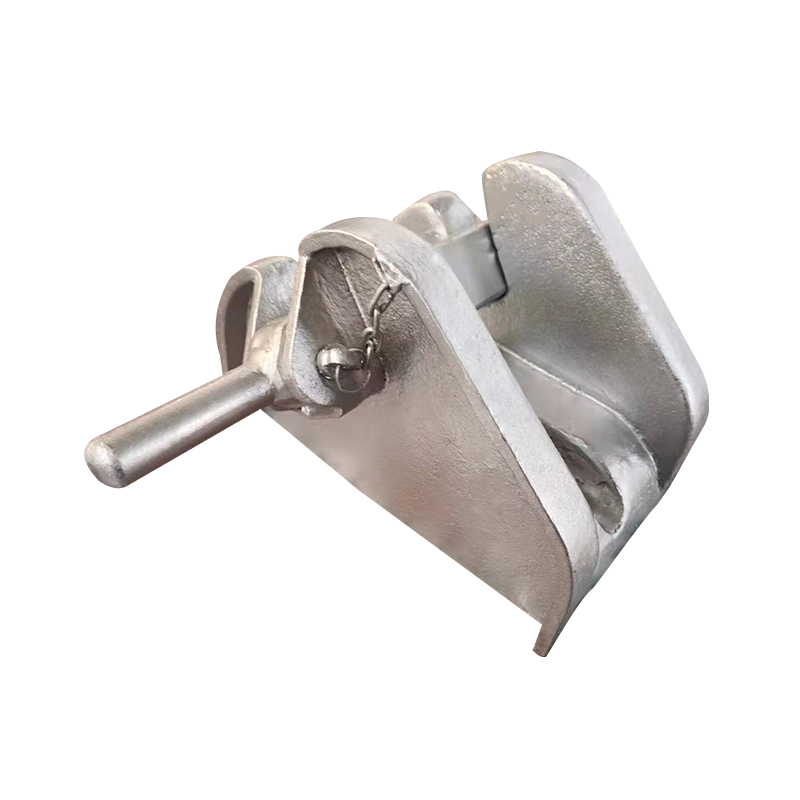 Guillotine Chain Cable Stopper for Anchor ChainA guillotine-style cable stopper that secures anchor chain and is intended to distribute mooring tension, relevant when checking stopper alignment and load handling.View Product →
Alignment decides whether a stopper feels solid or fussy. The chain should run from the bow roller into the stopper and on to the windlass in a straight, slightly downward line. If the stopper pulls the chain sideways or lifts it off the roller, the chain will fight the pawl and the links will wear on the plate edges. A pad under the stopper is sometimes needed to raise it to the right height, but too much pad creates a hump that deflects the chain.
Engaging the stopper is a two-step habit. First, bring the chain in until the stopper can take a link without the windlass still pulling. Second, drop the pawl or plate and check that it has seated fully. Trying to close a stopper against a moving or heavily loaded chain is how fingers get caught and how pawl tips get chipped. When weighing anchor, release the stopper first, then take the load on the windlass.
It also helps to think about what the stopper is not doing. It is not holding the chain while you break the anchor out of the seabed, and it is not a brake for controlled lowering. Those jobs belong to the windlass clutch and brake. The stopper's moment comes after the anchor is set and the chain is ready to be held.
The stopper must match the chain, not the boat's length alone. Chain diameter, link geometry, grade, and proof load all affect whether a pawl will seat properly and whether the fitting can take the working load. A stopper rated for a smaller chain may look generous on deck but still allow a link to sit too deep or too shallow in the throat.
Deck foundation matters just as much. The stopper may be strong enough, but a thin deck or a small backing plate can flex under load and loosen the bolts over time. On steel decks the foundation is usually welded and reinforced. On other decks a substantial backing plate and through-bolts are the norm. If the vessel is classed, the installation should follow the surveyor's requirements and the certificate should match the chain in service.
For a complete view of the chain, shackles, and swivels that work with the stopper, it is worth reviewing the full assembly rather than the stopper alone. The chain size you choose will set the size of every component around it.
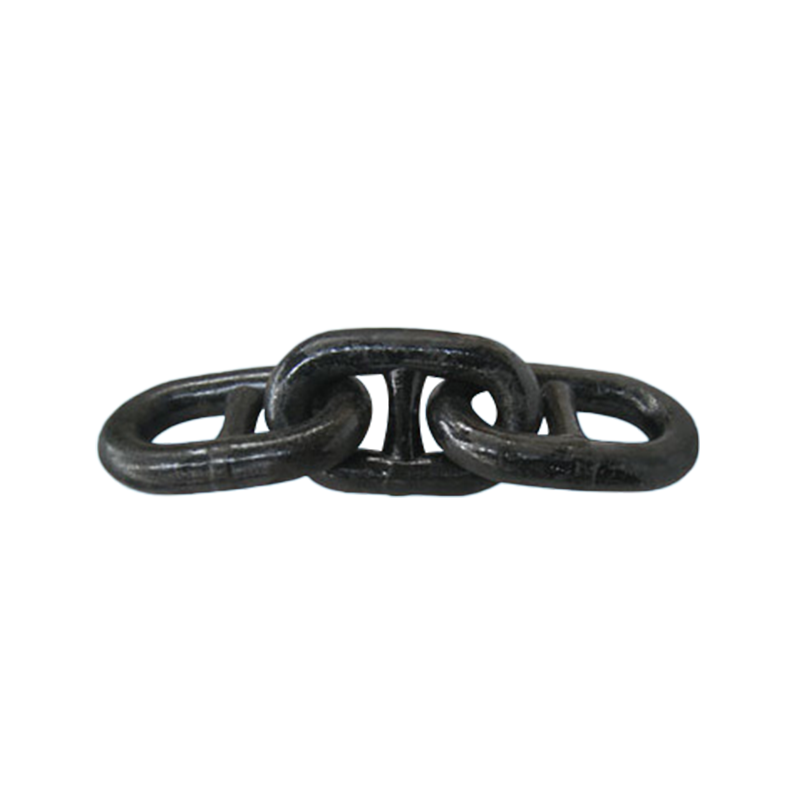 Studded Anchor Chain for Marine Mooring SystemsA studded anchor chain available in multiple diameters and grades, providing the chain-size basis for matching stoppers, shackles, and swivels in the assembly.View Product →
A stopper is a low-maintenance fitting, but it is not a fit-and-forget one. Most of the problems we see come from small things that were left alone for too long. A practical routine looks like this:
Paint and grease have their place, but keep heavy coatings off the contact surfaces where the link seats. A thick layer of paint can stop a pawl from dropping fully, and that is exactly the kind of small fault that shows up at the worst moment. If you are unsure which fitting suits your chain and deck layout, the answers on our FAQ page cover the common sizing and material questions.
A stopper holds the chain, but it does not absorb much energy. When the wind picks up or the swell rolls in, the snubber or bridle takes the shock and keeps the load from hammering the stopper and the bow roller. That is why long-term anchorages often use both: the snubber provides elasticity, and the stopper provides a positive stop behind it. The difference between anchoring and mooring arrangements is worth understanding before you add hardware to the bow, and our article on anchoring versus mooring explains where each one fits.
At rest, yes. Once the pawl or plate is seated, the chain tension passes through the stopper into the deck. That is why the foundation and the deck structure must be able to carry the load, not just the stopper body.
A light brake setting is a sensible backup, but the stopper should be the part holding the chain. If the brake is doing the work, the stopper is either badly aligned or not fully engaged.
Check it visually every time you anchor, and give it a proper inspection monthly or before a long passage. After any heavy weather or a dragging incident, inspect the pawl, plate, pins, and foundation before the next use.
A chain stopper is one of those fittings that is easy to overlook because it does nothing most of the time. Its value shows up in the moments when the wind builds, the anchor holds, and the chain stays exactly where it was set. Match it to the chain, mount it on a foundation that can take the load, keep the lead straight, and check it as part of your regular deck routine. Do that, and the windlass will last longer, the bow will be quieter, and the anchor will stay put.
The Importance and Challenges of Marine Anchors Marine anchors are essential components in the operation of vessels, playing a critical role in ensuring the stability and safety of ships while they ar...
READ MOREStability Challenges of Aquaculture Equipment: Why Are Aquaculture Mooring Anchors So Important? In modern aquaculture, especially offshore or offshore aquaculture, equipment stability is the cornerst...
READ MOREThe Role of a PE Yacht Anchor in Enhancing Mooring Stability The stability of a yacht in rough waters is influenced by various factors such as wind, waves, and currents. One of the most critical eleme...
READ MOREWhat materials are used for steel spherical buoys, and what are their structural advantages? As a key component of marine and inland navigation systems, the structural design and material selection of...
READ MORE
Copyright © Nantong Yangfan Marine Equipment Co., Ltd. All Rights Reserved.
