
 English
 中文简体
The Importance and Challenges of Marine Anchors Marine anchors are essential components in the operation of vessels, playing a critical role in ensuring the stability and safety of ships while they ar...
READ MORE



Nov 19, 2026
Walk along any working foredeck and you will find a piece of hardware that rarely gets a second look: the chain stopper. It sits between the hawse pipe and the windlass, usually painted the same colour as the deck, and it does one of the most important jobs on board. When the anchor is down and the weather turns, the stopper is what keeps the chain from running out and the anchor from being lost. In this guide we will walk through how a chain stopper works, how the load travels through it, and what to check before you trust it with your ground tackle.
Content
An anchor windlass is a pulling machine. It is designed to haul chain in and veer it out under control, and its brake is a useful aid for that job. What the brake is not designed for is holding the full weight of the anchor and chain, hour after hour, in a swell. That job belongs to the stopper.
The stopper is a mechanical holding device mounted on deck, in line with the chain. Its body takes the chain load and passes it directly into the deck structure, usually through a reinforced base plate. Once the stopper is engaged, the windlass can be slackened off, the brake can be released, and the chain is held by a component that was designed for static load rather than pulling.
Think of the load path: anchor, chain, stopper, deck. Every link in that path needs to be strong enough, and the stopper is often the point where the load is most concentrated. If you want to step back and see how this fits into the wider picture, our note on anchoring versus mooring explains the difference between a working anchor system and a permanent mooring.
The heart of most stoppers is a shaped pawl, jaw or gate that interacts with the chain links. In a typical pawl-type stopper, the chain runs through an open throat in the body. A spring-loaded pawl rests on top of the chain and drops between links as the chain moves. When the chain tries to run back out, the pawl catches on a link and wedges against the body. The harder the chain pulls, the tighter the pawl seats. This is why the stopper is described as self-holding: the load itself does the locking.
Other designs work on the same principle with different geometry. A roller stopper uses a hardened roller or cam to press the chain into a shaped seat, so that tension increases grip. A guillotine-type chain cable stopper uses a hinged gate that closes over a link, giving a positive block in both directions. In every case, the chain must be free to pass when the stopper is released, and fully captured when it is engaged.
On deck, the sequence matters as much as the hardware:
Never leave the stopper half-engaged or rely on the pawl resting on top of a link without load. A partial engagement can slip under shock loading and damage both the stopper and the chain.
Stoppers are not one-size-fits-all. The table below gives a practical overview of the main designs we see in service.
| Design | How it holds | Where it suits |
|---|---|---|
| Pawl or jaw stopper | A spring-loaded pawl drops between links and wedges against a link as the chain tries to run out | General cargo ships, workboats and smaller craft |
| Roller or chain-grip stopper | A roller or cam presses the chain into a shaped seat, using chain tension to increase grip | Large merchant vessels and high-load anchor systems |
| Guillotine chain cable stopper | A hinged gate closes over a link and blocks movement in both directions | Decks where space is tight and a positive mechanical stop is preferred |
| Chain compressor (for comparison) | A clamp that squeezes the chain to prevent movement, usually for short-term securing | Temporary holding, chain washing and maintenance |
On our own benches, the guillotine chain cable stopper is a common request from crews who want a clear visual confirmation that the chain is blocked. It is simple, robust and easy to inspect, which counts for a lot on a working deck.
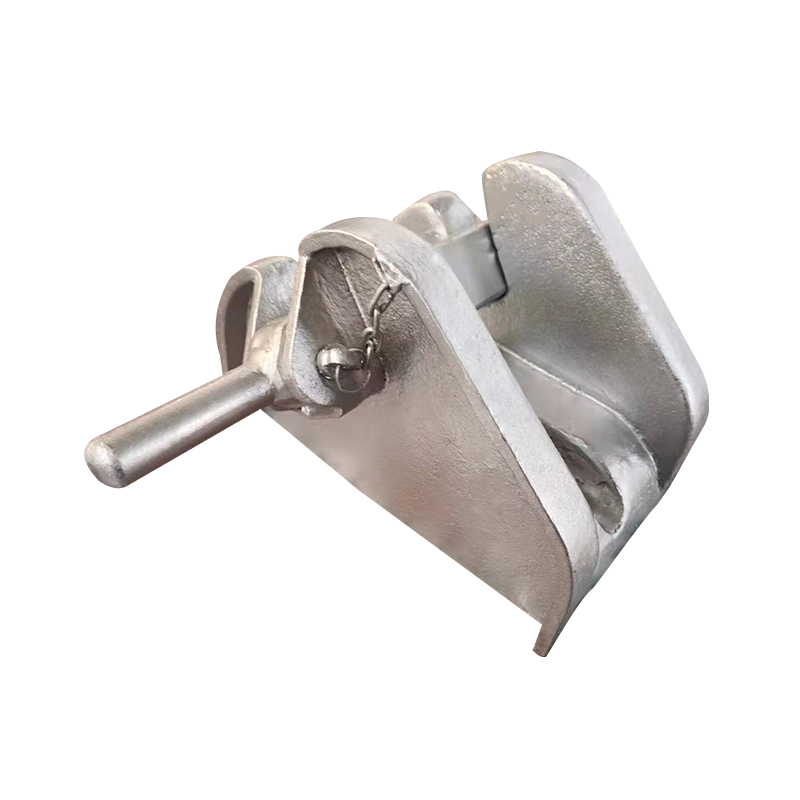 Guillotine Chain Cable Stopper for Visual Chain BlockingA simple, robust stopper that gives crews clear visual confirmation the chain is blocked and uses a guillotine design for load-bearing.View Product →
A stopper can be built like a tank and still fail if it is installed badly. The chain must run in a straight line from the hawse pipe through the stopper and on to the windlass gypsy. Side lead, height differences and sharp changes of direction all create bending loads that the stopper was never designed to take.
Weld or bolt the base to a reinforced deck area, with backing plates or insert plates where the deck scantlings require it. Keep the mounting surface flat so the body is not distorted when the bolts are tightened. Check that the pawl or gate moves freely through its full travel before the chain is loaded, and confirm that the chain size and grade match the stopper's rating. A stopper approved for one chain grade should not be used with another without checking with the manufacturer or class society.
If you are renewing the chain at the same time, matching the stopper to the new chain's diameter and grade is essential. A mismatched link geometry can make a good stopper miss or jam at exactly the wrong moment.
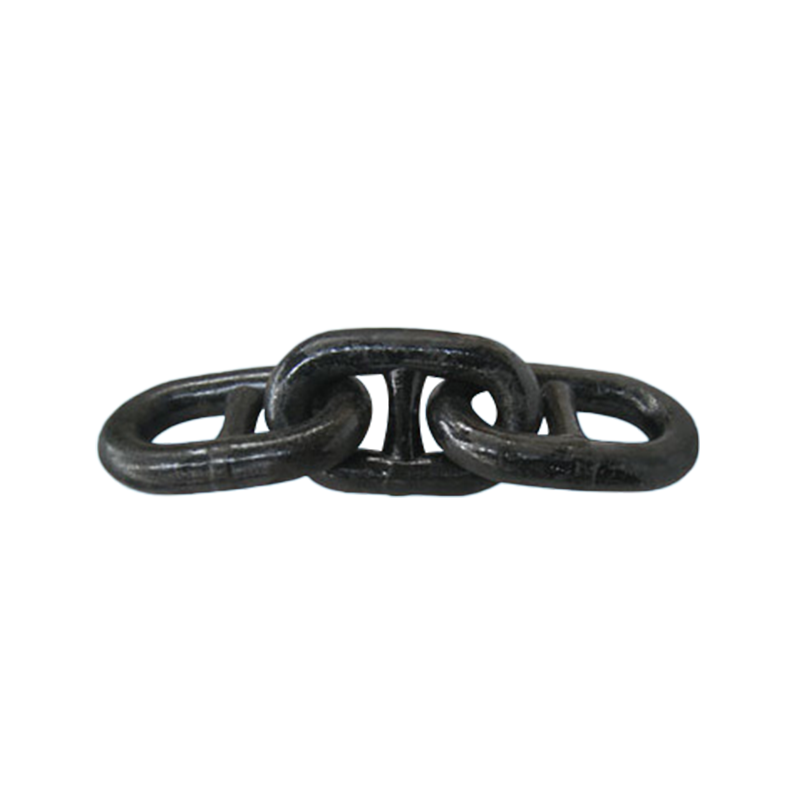 Stud Link Anchor Chain for Marine AnchoringHigh-strength stud link anchor chain in multiple diameters and AM1/U1 to AM3/U3 grades, suited to matching a stopper to chain size and grade.View Product →
Once installed, the stopper becomes part of the deck routine. A simple sequence keeps it reliable:
Teach the sequence to everyone on watch. Most stopper problems we hear about start with a hurried engagement or a release while the chain is still under load.
A chain stopper is a static component, but it lives in a dynamic environment. Salt water, chain grit and vibration all take their toll. A practical inspection covers:
Record what you find. A wear pattern that changes between surveys is a warning sign, even if the stopper still functions. If a pawl is worn past the manufacturer's limit, replace it rather than build it up with weld. And if the stopper has taken a heavy shock load, inspect it before the next anchoring operation.
Size selection starts with the chain, not the deck space. The stopper must match the chain diameter, link geometry and grade, and its holding capacity should be at least equal to the chain's proof load or the class society's requirement, whichever is higher. Check the chain's certificate and the stopper's rated load before you compare prices.
Approval matters too. If your vessel is classed, the stopper will usually need a type approval or an individual certificate from a recognised class society. A stamped certificate is not paperwork for its own sake; it tells you that the holding capacity has been verified against a standard rather than a catalogue claim.
For a complete view of the connecting hardware, our anchor chains and accessories range includes chain, swivels, kenter shackles and end shackles. Matching these components as a set avoids the common problem of a strong stopper paired with a weak end link.
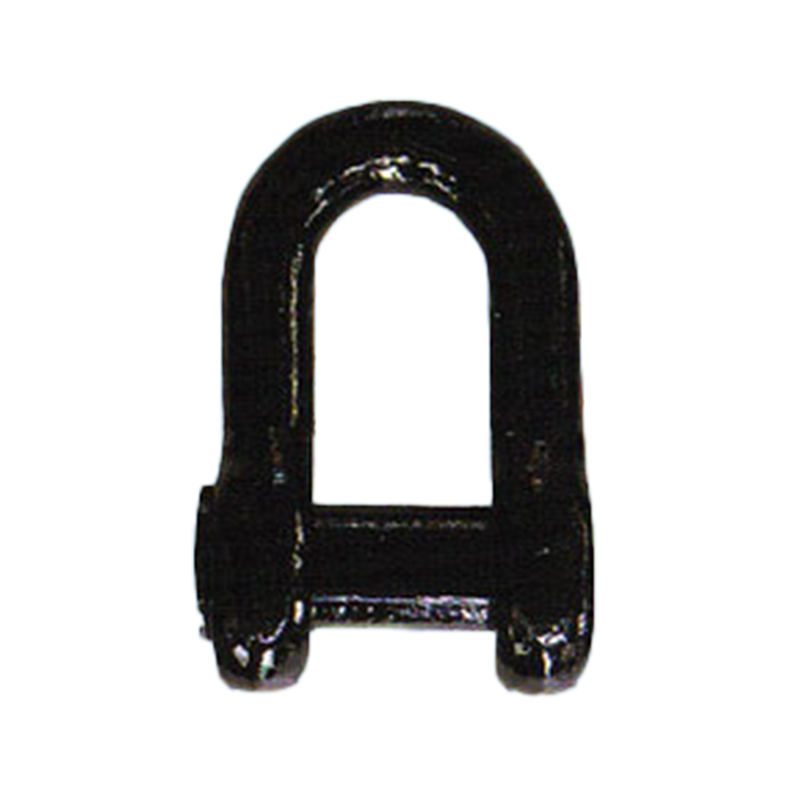 End Shackle for Anchor Chain and AccessoriesQuick-connect end shackle for anchor chain assemblies, designed for easy installation and disassembly without special tools to support efficient inspection and replacement.View Product →
Windlass brakes are designed to control the drum during hauling and veering. They can hold a chain for short periods, but they are not a static holding device and can slip under sustained load, heat or vibration. The stopper takes that load off the brake and the windlass shaft.
A stopper blocks the chain and transfers the load to the deck. A compressor clamps the chain to prevent movement, usually for short-term work such as maintenance or chain washing. They look similar but are used for different jobs.
Look for wear beyond the maker's limit, cracks, a pawl that does not seat squarely, or a release mechanism that binds. If the stopper has been overloaded or the chain has jumped past it, have it inspected before the next use.
Requirements vary by flag state, class society and vessel type. As a practical rule, any vessel that anchors regularly and relies on its windlass brake to hold the chain should consider a stopper as essential equipment.
If you are planning a new anchor system or replacing a stopper that has seen better days, we are happy to talk through the chain size, deck layout and approval requirements. Our team has been building marine anchors, chains and deck fittings in Rugao since 2010, and we would rather help you get the details right than sell you the wrong fitting.
The Importance and Challenges of Marine Anchors Marine anchors are essential components in the operation of vessels, playing a critical role in ensuring the stability and safety of ships while they ar...
READ MOREStability Challenges of Aquaculture Equipment: Why Are Aquaculture Mooring Anchors So Important? In modern aquaculture, especially offshore or offshore aquaculture, equipment stability is the cornerst...
READ MOREThe Role of a PE Yacht Anchor in Enhancing Mooring Stability The stability of a yacht in rough waters is influenced by various factors such as wind, waves, and currents. One of the most critical eleme...
READ MOREWhat materials are used for steel spherical buoys, and what are their structural advantages? As a key component of marine and inland navigation systems, the structural design and material selection of...
READ MORE
Copyright © Nantong Yangfan Marine Equipment Co., Ltd. All Rights Reserved.
