
 English
 中文简体
The Importance and Challenges of Marine Anchors Marine anchors are essential components in the operation of vessels, playing a critical role in ensuring the stability and safety of ships while they ar...
READ MORE



Oct 27, 2026
A buoy looks deceptively simple. From a distance it is just a floating shape, a coat of paint, maybe a blinking light. In reality, every buoy is part of an engineered system that must hold its position through waves, wind, tide, and the occasional boat pulling on it. Whether it marks a shipping channel, carries ocean sensors, or keeps a yacht safely off the seabed, the way a buoy works comes down to two questions: what keeps it afloat, and what keeps it in place.
Content
A buoy floats for the same reason a ship does. It displaces more water than it weighs, and the upward force generated by that displaced water — buoyancy — balances the weight of the buoy and everything attached to it. This balance is the starting point for every buoy design.
A steel buoy keeps a large volume of air trapped inside a sealed, watertight hull, so a heavy shell can still float easily. Foam-filled buoys use closed-cell plastic instead, which cannot soak up water even if the outside skin is scratched or punctured. As long as the total weight of the buoy stays below the weight of the water it pushes aside, it will keep floating. How much of the body sits above the waterline depends on the payload: a light, solar panels, sensors, and a mooring eye all add weight and change the buoy's riding height.
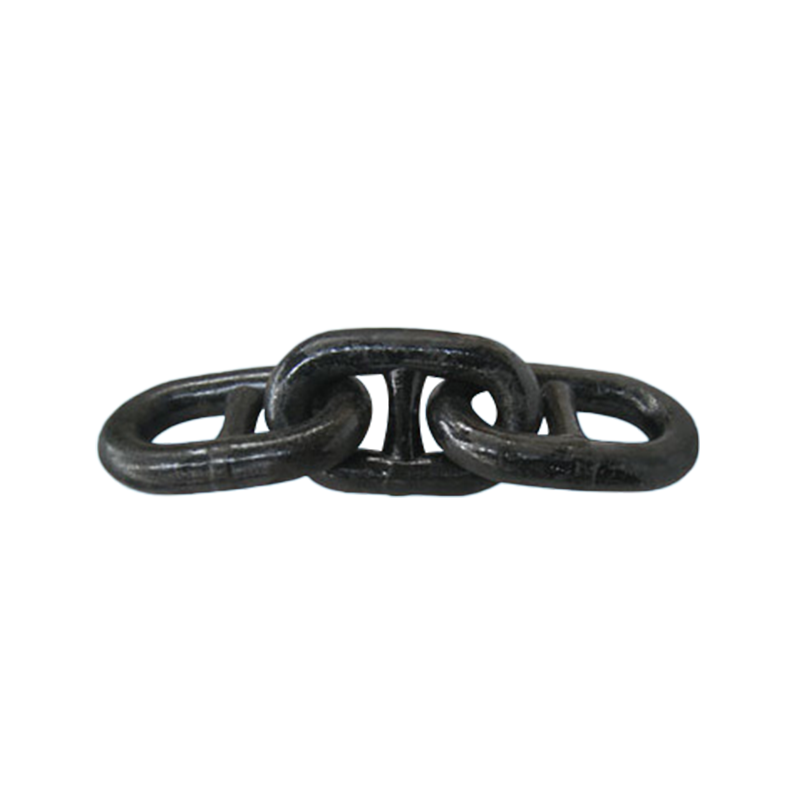 Studded Anchor Chain for Permanent Mooring SystemsThis high-strength chain connects buoy to seabed, offering corrosion resistance and reliable grip in harsh marine environments, essential for permanent installations.View Product →
A floating body drifts with wind, waves, and current unless something holds it to the seabed. That something is the mooring system. In a permanent installation, the buoy is connected to the bottom by three working components:
The anchor is selected according to the seabed — sand, mud, rock, or seagrass behave very differently — and the chain carries most of the wear. In our workshop we see the same principle across every mooring arrangement we supply: the chain should be heavy enough to lie on the bottom in a curve, so that wave forces never pull directly on the anchor. That curve, called scope, creates friction along the seabed and adds significant holding power. A chain that is too light for the depth or too short for the weather will lift off the bottom and shock-load the anchor, which is how moorings drag.
Every part of a mooring buoy works together, and each component has a specific job. The table below summarizes the main elements of a conventional single-point mooring assembly.
| Component | Role in the system | Design note |
|---|---|---|
| Buoy body | Provides flotation and a secure attachment point | Sized for the load; must be inspected for hull damage |
| Anchor chain | Connects buoy to the seabed hardware | Grade and weight are chosen by depth, current, and forecast loads |
| Sinker | Adds weight and reduces snatch loads | Concrete, steel, or cast iron depending on budget and seabed |
| Anchor | Locks the whole system to the seabed | Type depends on bottom composition and required holding force |
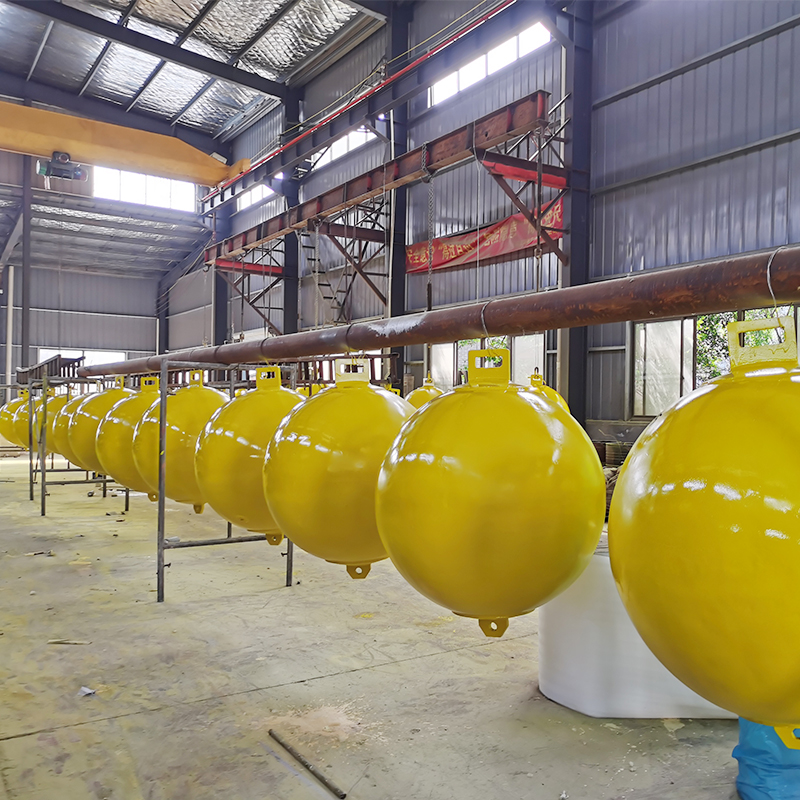 Marine Steel Spherical Buoy for Stable FloatingDesigned for even force distribution and high stability, this spherical buoy resists overturning and suits navigation, monitoring, and engineering applications.View Product →
Not all buoys do the same job, and their shape, color, and fittings usually reveal their purpose. The main categories are:
Permanent mooring buoys, such as the steel cylindrical and spherical types we build, are designed to stay on station for years in saltwater and storm conditions. Vessel traffic, seabed type, and expected loads all influence the final design. If you would like a broader overview, our guide to mooring buoy types and uses explains the differences in more detail.
A buoy does more than float. It has to be understood by every vessel that approaches it. The "language" of navigation buoys is built from three elements:
Research buoys use a different kind of communication. Solar panels charge batteries that power sensors, and a data logger stores readings until a radio, cellular, or satellite link transmits them to shore. In this way a single wave buoy can act as a weather station, a current meter, and a wave recorder at the same time.
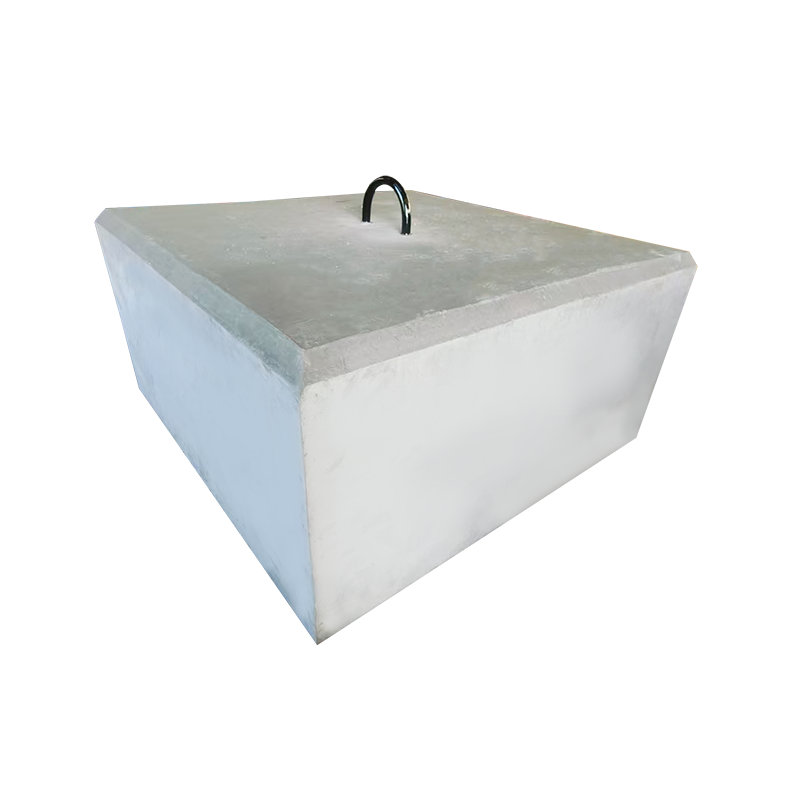 Concrete Mooring Sinkers for Durable AnchoringCost-effective, corrosion-resistant sinkers provide dependable holding across various seabeds and depths, ensuring safety for buoys, vessels, and platforms.View Product →
A buoy is only as good as the hardware underneath it. A worn chain or an undersized anchor can turn a convenient mooring into a hazard during a storm, and a drifting buoy becomes a navigational danger instead of an aid. That is why operators should inspect the entire assembly — not just the visible hull — on a regular schedule.
Marine growth adds weight, chafing weakens chain links, and a shifted sinker can leave the anchor partly exposed. When repairs are needed, replacement components should match the original design weight and material. Choosing the right sinker is a good example: concrete, steel, and cast iron all serve the same purpose but with different weights per volume and different costs, so the best option depends on the seabed and the forces involved.
Well-designed mooring systems also protect the environment. By giving boats a fixed point to tie to, they reduce anchor dragging over coral reefs, seagrass beds, and other sensitive habitats — one of the reasons marine authorities install them in protected areas. Our step-by-step guide to setting up a steel mooring buoy walks through the main considerations for a successful installation.
A buoy sits at the surface, but its real work happens below. Buoyancy keeps it floating, a carefully matched mooring system keeps it in place, and lights, signals, and sensors make it useful to everyone on the water. Understanding how these elements work together helps you choose the right design, install it correctly, and keep it reliable for the long term.
The Importance and Challenges of Marine Anchors Marine anchors are essential components in the operation of vessels, playing a critical role in ensuring the stability and safety of ships while they ar...
READ MOREStability Challenges of Aquaculture Equipment: Why Are Aquaculture Mooring Anchors So Important? In modern aquaculture, especially offshore or offshore aquaculture, equipment stability is the cornerst...
READ MOREThe Role of a PE Yacht Anchor in Enhancing Mooring Stability The stability of a yacht in rough waters is influenced by various factors such as wind, waves, and currents. One of the most critical eleme...
READ MOREWhat materials are used for steel spherical buoys, and what are their structural advantages? As a key component of marine and inland navigation systems, the structural design and material selection of...
READ MORE
Copyright © Nantong Yangfan Marine Equipment Co., Ltd. All Rights Reserved.
