
 English
 中文简体
中文简体The Importance and Challenges of Marine Anchors Marine anchors are essential components in the operation of vessels, playing a critical role in ensuring the stability and safety of ships while they ar...
READ MORE



Oct 14, 2026
Ask one of our chain makers how an anchor chain is made and you will probably get a shrug, because for them it is simply Tuesday. For everyone else it is a fair question. A chain is the only thing standing between a ship and the seabed, and the way it is produced has changed less over the past century than you might expect.
We build anchor chains and the fittings that go with them, so here is the whole process walked through from the steel mill to the proof load test, without the sales pitch.
Content
A finished chain is more than a row of links. In commercial sizes it is supplied in lengths, often called shots, each typically around 27.5 metres, joined end to end by a joining shackle such as a Kenter pattern. One end carries an end shackle that stays in the locker, and the other carries a swivel so the anchor can turn without winding a twist into the chain.
Every one of those parts has to be at least as strong as the chain itself. That is why the standards treat the chain and its accessories as one system: a length that holds 100 tonnes is not much use if the swivel you bolted to it lets go first.
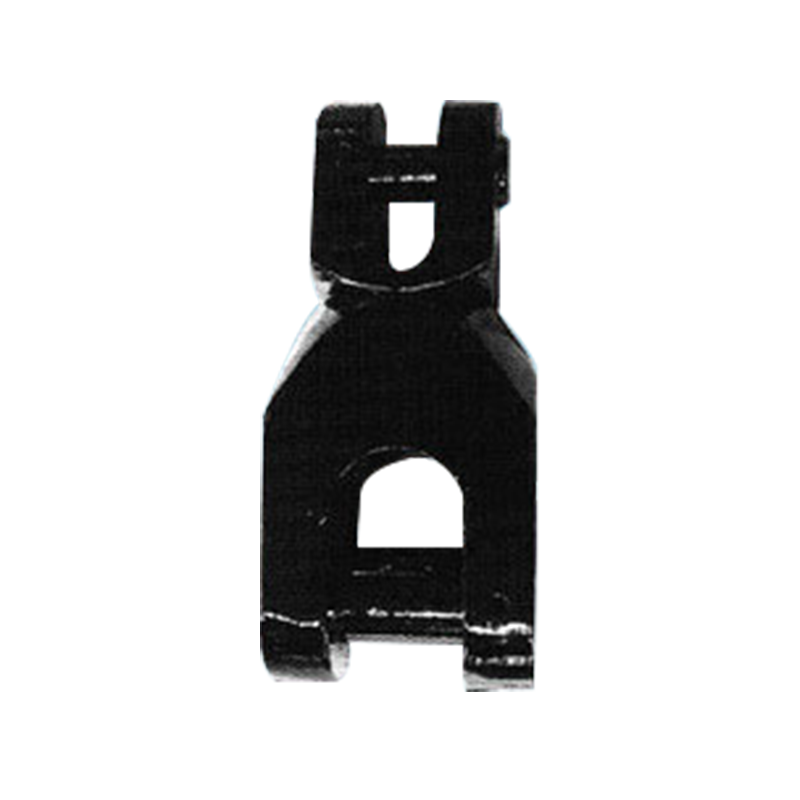 Anchor Swivel Shackle Type A for Marine AnchoringHigh-strength alloy steel swivel shackle for marine anchoring and mooring, suited to harsh, corrosive conditions where chain accessories must carry the same load.View Product →
Every link began life as a piece of steel bar. How that bar becomes a link is the first real decision in the process, and there are three main routes.
Forging is how heavy stud link chain is made. A billet is cut to a precise weight, heated in a furnace, and then shaped between dies under repeated blows. The advantage is not only strength: forging works the grain of the steel so that it follows the curve of the link, which is where the fatigue resistance comes from. It is also the most demanding route, because the dies are costly and the temperature window is narrow.
Casting pours molten steel into a link-shaped mould. It is economical for complex shapes and short runs, which is why you see it in smaller chain, in fittings such as swivels and shackles, and in anchor components. The trade-off is that internal soundness is harder to guarantee, so cast links usually sit at the lighter end of the duty range.
Welded chain is made by bending bar into a link and joining the ends with a flash butt weld, then trimming and heat treating. It is common in smaller diameters and in studless chain. Done properly it performs very well; done cheaply, the weld becomes the weakest point in the whole length. This is the route where the specification you buy to matters most.
| Route | How the link is formed | Where it is typically used | Key consideration |
|---|---|---|---|
| Forging | A heated billet is shaped between dies under repeated blows | Heavy stud link chain for ships and offshore mooring | Best grain flow and fatigue resistance; highest tooling cost |
| Casting | Molten steel is poured into a link-shaped mould | Smaller chain, swivels, shackles and fittings | Economical for complex shapes; internal soundness must be verified |
| Welded fabrication | Bar is bent into shape and the two ends are welded together | Smaller diameter chain and studless chain | The weld is the critical point and needs heat treatment and testing |
If you would like to see how these routes end up as a finished product, the sizes, grades and finishes we produce are set out on our anchor chain page.
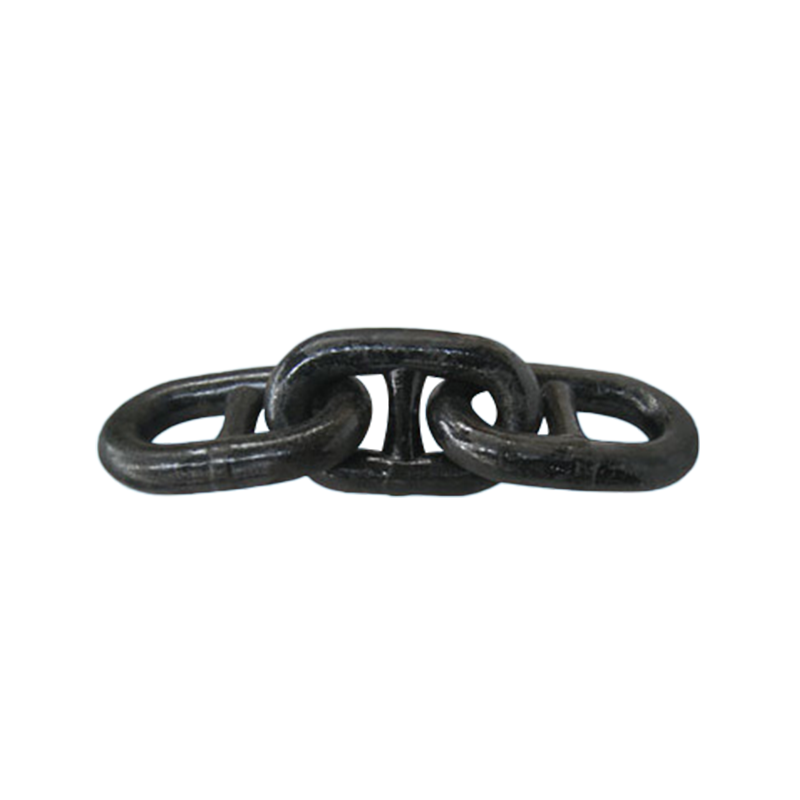 Stud Link Anchor Chain for Ships and Marine EngineeringStud link anchor chain in a wide diameter range, with proof and breaking load data for ships and harsh marine environments.View Product →
Whichever route is used, the sequence on the shop floor looks broadly like this.
Steps five and eight are the ones worth understanding as a buyer. Welding a link is not difficult; welding it so that the joint matches the parent metal, and then heat treating the whole length so the weld and the bar behave the same way under load, is the part that separates a chain from a row of steel loops.
Stud link chain has a crossbar through the middle of every link. It is not decorative. The stud stops the link from collapsing under load and keeps the chain from knotting in the locker, which is why it is the default for ship's anchor chain and offshore mooring work.
Studless chain leaves the stud out. It is lighter per metre for the same strength, which matters on smaller vessels, and it is easier on a windlass that was never designed for the extra weight. It also kinks more readily, so it tends to be used where the chain runs short and rarely sits coiled for long. Which one you need usually follows from the vessel and the windlass rather than from preference, and a supplier should ask about both before quoting.
For ship's chain the grades you will see most often are U1, U2 and U3 in ISO terms, or grade 30, 40, 60 and 80 in the language some classification societies use. The naming is not perfectly interchangeable between rule sets, so the honest answer is always to quote the standard and the certificate you actually need. Testing is where a chain proves it:
We work to CCS, ABS, LR, DNV, NK, BV and other society requirements, and each certificate is issued against the standard the chain was made to. If a supplier cannot tell you which standard your chain was tested against, that is a question worth asking twice.
A chain on its own does not hold anything. One fitting does a surprising amount of the work: the Kenter-type joining shackle, which lets you connect two shots into one length and separate them again on deck. Its halves interlock and are locked by a tapered pin, so the joint approaches the strength of the chain around it while still being openable with ordinary tools at sea.
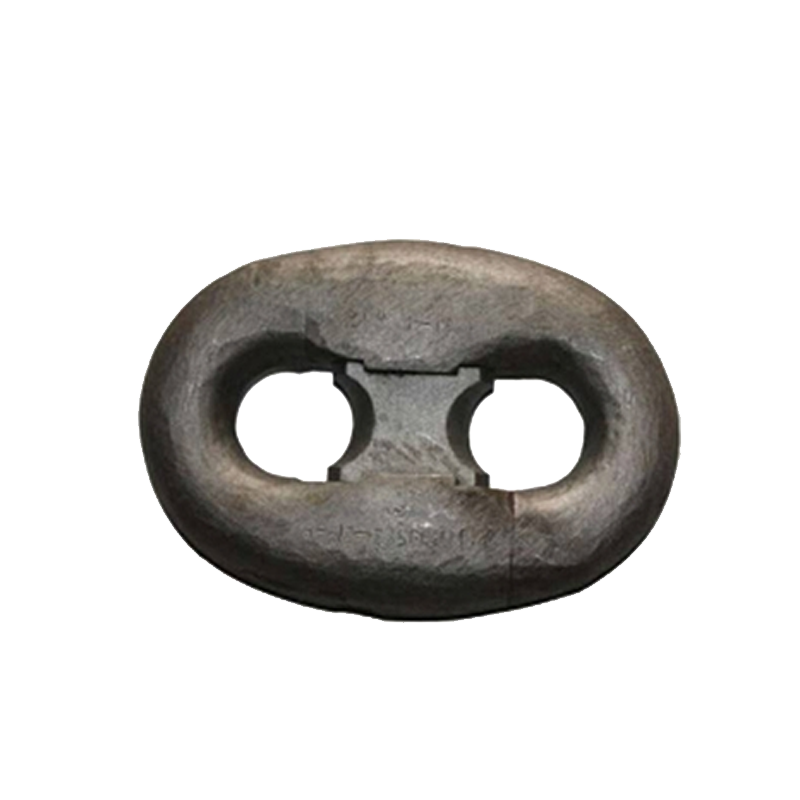 Kenter-Type Joining Shackle for Anchor Chain SystemsJoining shackle for anchor chain systems, connecting two shots with a fastening design intended for stability under high loads and vibration.View Product →
Because these parts carry the same load as the chain, we normally quote them together rather than as separate items, so that the grade and size match from the anchor right back to the locker.
Four questions sort out most enquiries quickly.
If you are still working out how the chain, the rode and the mooring line fit together, our note on the difference between anchoring and mooring is a reasonable place to start.
None of this is complicated once you have watched it happen, but it does explain why two chains of the same diameter can behave so differently, and why the paperwork matters as much as the steel. If you have a question we have not covered here, our FAQ is a good next step, or send us the vessel details and we will tell you honestly whether we are the right people to make it.
The Importance and Challenges of Marine Anchors Marine anchors are essential components in the operation of vessels, playing a critical role in ensuring the stability and safety of ships while they ar...
READ MOREStability Challenges of Aquaculture Equipment: Why Are Aquaculture Mooring Anchors So Important? In modern aquaculture, especially offshore or offshore aquaculture, equipment stability is the cornerst...
READ MOREThe Role of a PE Yacht Anchor in Enhancing Mooring Stability The stability of a yacht in rough waters is influenced by various factors such as wind, waves, and currents. One of the most critical eleme...
READ MOREWhat materials are used for steel spherical buoys, and what are their structural advantages? As a key component of marine and inland navigation systems, the structural design and material selection of...
READ MORE
Copyright © Nantong Yangfan Marine Equipment Co., Ltd. All Rights Reserved.
